Compare the two sides
The A side has a small dictionary. Each word does a small job, so one idea needs many words. The B side has a large dictionary. Its idioms do a full job, so one idea often fits in one line.
Size of each full language
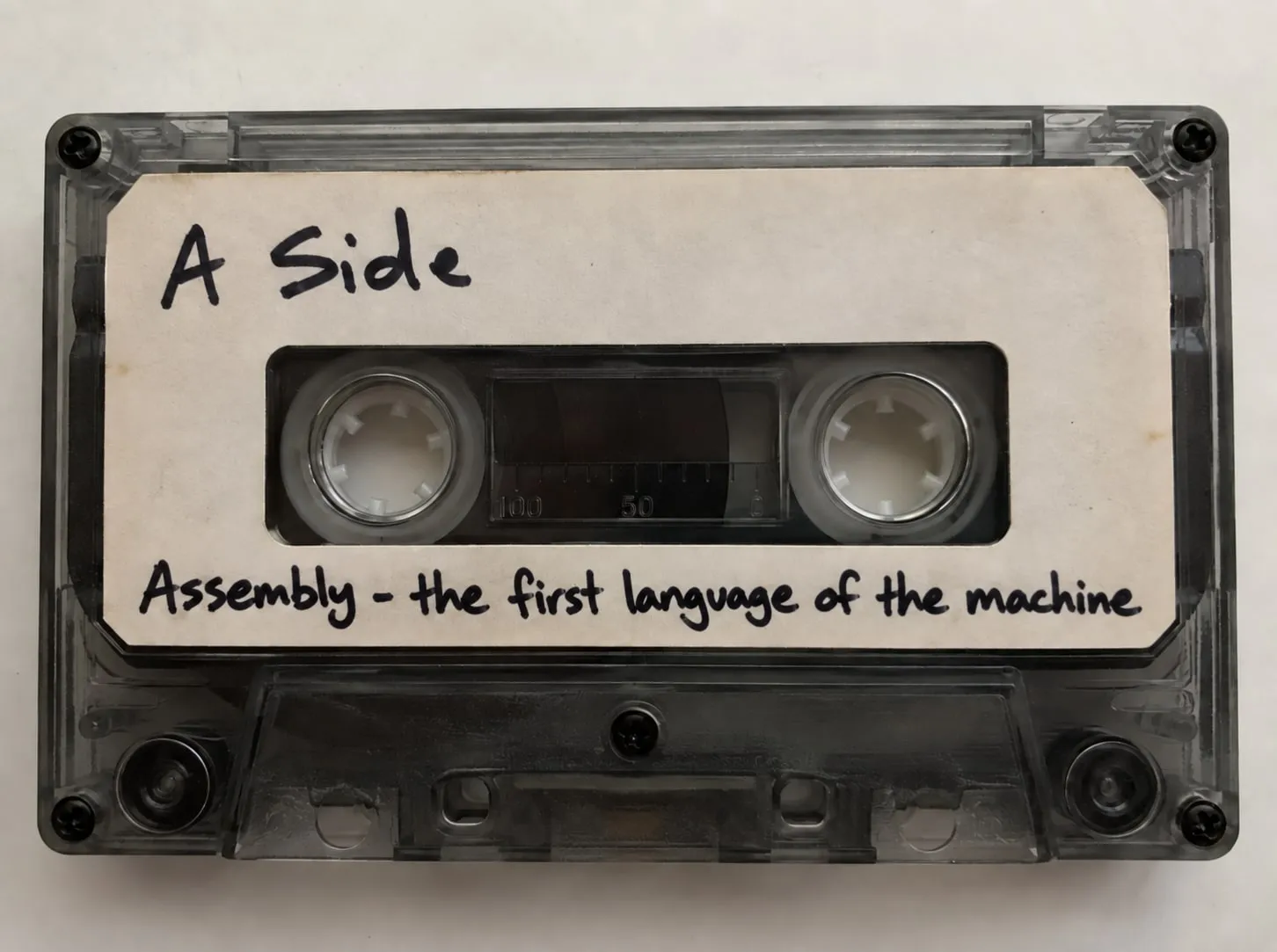
A Assembly
Intel 8086, 16-bit real mode, written for the NASM assembler (the dialect of the retro game)
- 81 instructions in the original 8086 listThe list puts some families on one line, for example all conditional jumps. Source: Wikipedia, List of x86 instructions (retrieved 2026-09-27).
- 118 written forms of those instructionsThis count includes each conditional jump and its synonyms, for example JE and JZ. Source: Counted from the same Wikipedia table.
- 14 register names8 general registers, 4 segment registers, IP and FLAGS. Source: Intel 8086 register set.
- 1,000+ instruction names in modern x86-64Each new processor generation added words. We do not need them for the game. Source: Reviewer knowledge, not counted. This number is an estimate, not a count.
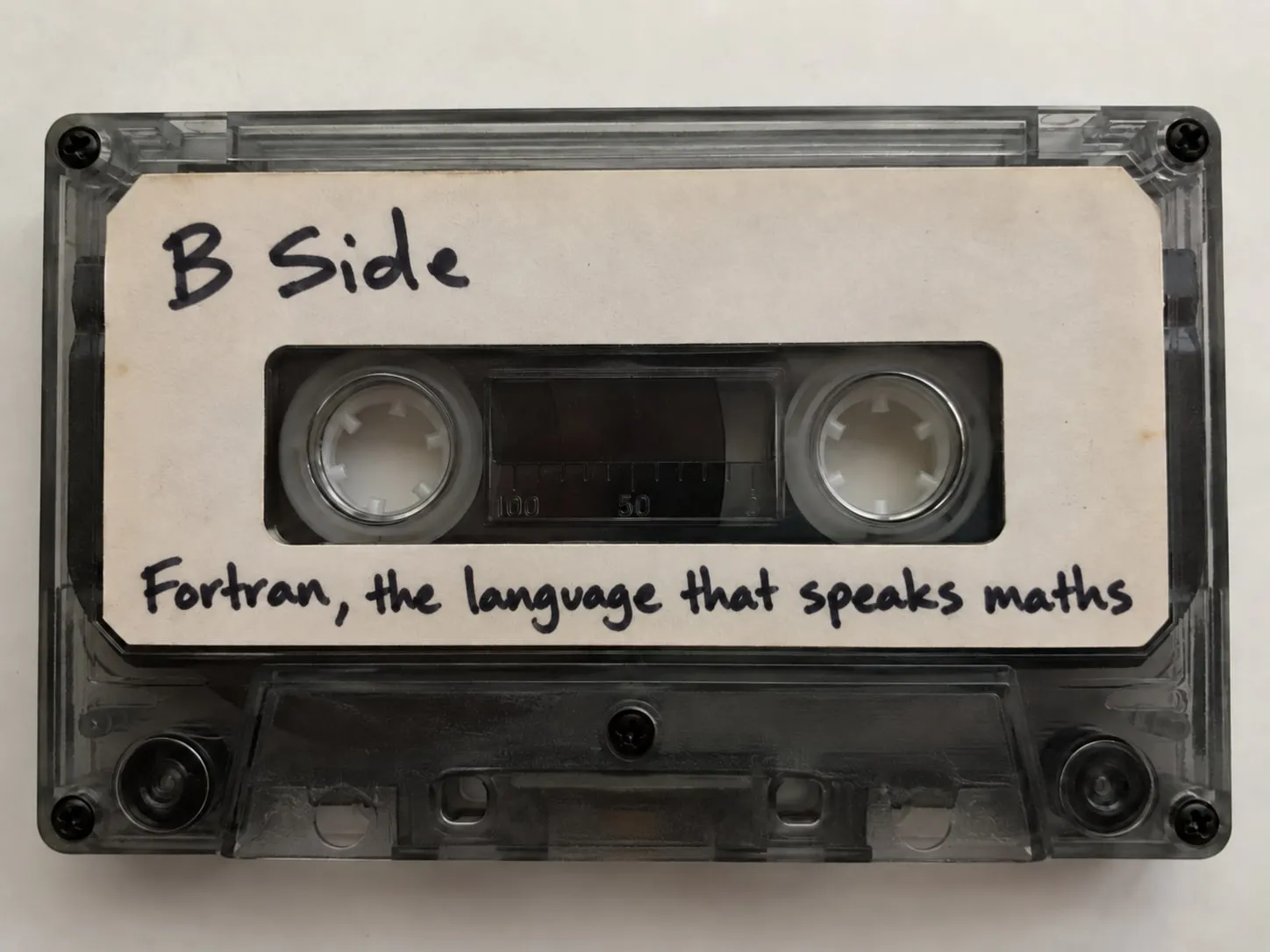
B Fortran
Modern Fortran (2008 to 2023 standards), free-form text, built with gfortran
- 598 different keywords in Fortran 2018Fortran has no reserved words. A keyword can also be a name, for example a variable called real. Source: cdslaborg/FortranKeywords, FortranKeywords2018.txt (MIT license).
- 275 built-in procedures (idioms)Functions and subroutines that come with the language, for example SQRT, SUM and MATMUL. Source: Counted from the same list.
- 127 statement words (verbs and structure words)For example PRINT, ALLOCATE, IF, DO, MODULE and CONTAINS. Source: Counted from the same list.
- 45 attributes (adjectives)For example ALLOCATABLE, PARAMETER and INTENT(IN). Source: Counted from the same list.
Our first words, by part of speech
The bars count the words in this site's dictionary, not the full languages.
Strengths, segment by segment
| Segment | A side: Assembly | B side: Fortran |
|---|---|---|
| Keeping values How do you tell the machine to remember a number? |
|
|
| Doing arithmetic How do you tell the machine to calculate? |
|
|
| Making choices and repeating How do you say "if" and "again"? |
|
|
| Working with many values How do you do one thing to a long list of values? |
|
|
| Organizing a program How do you divide a long text into parts with names? |
|
|
| Showing text and reading keys How does the program talk to the person at the keyboard? |
|
|
| Controlling the hardware How do you talk to the screen, the keyboard chip and the clock directly? |
|
|